A programming language is an artificial language designed to express computations that can be performed by a machine, particularly a computer. Programming languages can be used to create programs that control the behavior of a machine, to express algorithms precisely, or as a mode of human communication.
Many programming languages have some form of written specification of their syntax (form) and semantics (meaning). Some languages are defined by a specification document. For example, the C programming language is specified by an ISO Standard. Other languages, such as Perl, have a dominant implementation that is used as a reference.
The earliest programming languages predate the invention of the computer, and were used to direct the behavior of machines such as Jacquard looms and player pianos. Thousands of different programming languages have been created, mainly in the computer field, with many more being created every year. Most programming languages describe computation in an imperative style, i.e., as a sequence of commands, although some languages, such as those that support functional programming or logic programming, use alternative forms of description.
Definition
A programming language is a notation for writing programs, which are specifications of a computation or algorithm. Some, but not all, authors restrict the term "programming language" to those languages that can express all possible algorithms. Traits often considered important for what constitutes a programming language include:
* Function and target: A computer programming language is a language used to write computer programs, which involve a computer performing some kind of computation or algorithm and possibly control external devices such as printers, disk drives, robots, and so on. For example PostScript programs are frequently created by another program to control a computer printer or display. More generally, a programming language may describe computation on some, possibly abstract, machine. It is generally accepted that a complete specification for a programming language includes a description, possibly idealized, of a machine or processor for that language.[6] In most practical contexts, a programming language involves a computer; consequently programming languages are usually defined and studied this way. Programming languages differ from natural languages in that natural languages are only used for interaction between people, while programming languages also allow humans to communicate instructions to machines.
* Abstractions: Programming languages usually contain abstractions for defining and manipulating data structures or controlling the flow of execution. The practical necessity that a programming language support adequate abstractions is expressed by the abstraction principle; this principle is sometimes formulated as recommendation to the programmer to make proper use of such abstractions.
* Expressive power: The theory of computation classifies languages by the computations they are capable of expressing. All Turing complete languages can implement the same set of algorithms. ANSI/ISO SQL and Charity are examples of languages that are not Turing complete, yet often called programming languages.
Markup languages like XML, HTML or troff, which define structured data, are not generally considered programming languages. Programming languages may, however, share the syntax with markup languages if a computational semantics is defined. XSLT, for example, is a Turing complete XML dialect. Moreover, LaTeX, which is mostly used for structuring documents, also contains a Turing complete subset.
The term computer language is sometimes used interchangeably with programming language. However, the usage of both terms varies among authors, including the exact scope of each. One usage describes programming languages as a subset of computer languages.21][ In this vein, languages used in computing that have a different goal than expressing computer programs are generically designated computer languages. For instance, markup languages are sometimes referred to as computer languages to emphasize that they are not meant to be used for programming.[22] Another usage regards programming languages as theoretical constructs for programming abstract machines, and computer languages as the subset thereof that runs on physical computers, which have finite hardware resources.[23] John C. Reynolds emphasizes that formal specification languages are just as much programming languages as are the languages intended for execution. He also argues that textual and even graphical input formats that affect the behavior of a computer are programming languages, despite the fact they are commonly not Turing-complete, and remarks that ignorance of programming language concepts is the reason for many flaws in input formats.[24]
Machine language
For the first machines in the 1940s, programmers had no choice but to write in the sequences of digits that the computer executed. For example, assume we want to compute the absolute value of A + B − C, where A is the value at machine address 3012, B is the value at address 3013, and C is the value at address 3014, and then store this value at address 3015.
It should be clear that programming in this manner is difficult and fraught with errors. Explicit memory locations must be written, and it is not always obvious if simple errors are present. For example, at location 02347, writing 101… instead of 111… would compute |A + B + C| rather than what was desired. This is not easy to detect.
Assembly language
Since each component of a program stands for an object that the programmer understands, using its name rather than numbers should make it easier to program. By naming all locations with easy-to-remember names, and by using symbolic names for machine instructions, some of the difficulties of machine programming can be eliminated. A relatively simple program called an assembler converts this symbolic notation into an equivalent machine language program.
The symbolic nature of assembly language greatly eased the programmer's burden, but programs were still very hard to write. Mistakes were still common. Programmers were forced to think in terms of the computer's architecture rather than in the domain of the problem being solved.
High-level language
The first programming languages were developed in the late 1950s. The concept was that if we want to compute |A + B − C|, and store the result in a memory location called D, all we had to do was write D = |A + B − C| and let a computer program, the compiler, convert that into the sequences of numbers that the computer could execute. FORTRAN (an acronym for Formula Translation) was the first major language in this period.
FORTRAN statements were patterned after mathematical notation. In mathematics the = symbol implies that both sides of the equation have the same value. However, in FORTRAN and some other languages, the equal sign is known as the assignment operator. The action carried out by the computer when it encounters this operator is, “Make the variable named on the left of the equal sign have the same value as the expression on the right.” Because of this, in some early languages the statement would have been written as −D → D to imply movement or change, but the use of → as an assignment operator has all but disappeared.
The compiler for FORTRAN converts that arithmetic statement into an equivalent machine language sequence. In this case, we did not care what addresses the compiler used for the instructions or data, as long as we could associate the names A, B, C, and D with the data values we were interested in.
Structure of programming languages
Programs written in a programming language contain three basic components: (1) a mechanism for declaring data objects to contain the information used by the program; (2) data operations that provide for transforming one data object into another; (3) an execution sequence that determines how execution proceeds from start to finish.
Data declarations
Data objects can be constants or variables. A constant always has a specific value. Thus the constant 42 always has the integer value of forty-two and can never have another value. On the other hand, we can define variables with symbolic names. The declaration of variable A as an integer informs the compiler that A should be given a memory location much like the way the variable A in example (2) was given the machine address 03012. The program is given the option of changing the value stored at this memory location as the program executes.
Each data object is defined to be of a specific type. The type of a data object is the set of values the object may have. Types can generally be scalar or aggregate. An object declared to be a scalar object is not divisible into smaller components, and generally it represents the basic data types executable on the physical computer. In a data declaration, each data object is given a name and a type. The compiler will choose what machine location to assign for the declared name.
Data operations
Data operations provide for setting the values into the locations allocated for each declared data variable. In general this is accomplished by a three-step process: a set of operators is defined for transforming the value of each data object, an expression is written for performing several such operations, and an assignment is made to change the value of some data object.
For each data type, languages define a set of operations on objects of that type. For the arithmetic types, there are the usual operations of addition, subtraction, multiplication, and division. Other operations may include exponentiation (raising to a power), as well as various simple functions such as modula or remainder (when dividing one integer by another). There may be other binary operations involving the internal format of the data, such as binary and, or, exclusive or, and not functions. Usually there are relational operations (for example, equal, not equal, greater than, less than) whose result is a boolean value of true or false. There is no limit to the number of operations allowed, except that the programming language designer has to decide between the simplicity and smallness of the language definition versus the ease of using the language.
Execution sequence
The purpose of a program is to manipulate some data in order to produce an answer. While the data operations provide for this manipulation, there must be a mechanism for deciding which expressions to execute in order to generate the desired answer. That is, an algorithm must trace a path through a series of expressions in order to arrive at an answer. Programming languages have developed three forms of execution sequencing: (1) control structures for determining execution sequencing within a procedure; (2) interprocedural communication between procedures; and (3) inheritance, or the automatic passing of information between two procedures.
Corrado Böhm and Giuseppi Jacopini showed in 1966 that a programming language needs only three basic statements for control structures: an assignment statement, an IF statement, and a looping construct. Anything else can simplify programming a solution, but is not necessary. If we add an input and an output statement, we have all that we need for a programming language. Languages execute statements sequentially with the following variations to this rule.
IF statement. Most languages include the IF statement. In the IF-THEN statement, the expression is evaluated, and if the value is true, then Statement1 is executed next. If the value is false, then the statement after the IF statement is the next one to execute. The IF-THEN-ELSE statement is similar, except that specific true and false options are given to execute next. After executing either the THEN or ELSE part, the statement following the IF statement is the next one to execute.
The usual looping constructs are the WHILE statement and the REPEAT statement. Although only one is necessary, languages usually have both.
Inheritance is the third major form of execution sequencing. In this case, information is passed automatically between program segments. This is the basis for the models used in the object-oriented languages C++ and Java.
Inheritance involves the concept of a class object. There are integer class objects, string class objects, file class objects, and so forth. Data objects are instances of these class objects. Objects inherit the properties of the objects from which they were created. Thus, if an integer object were designed with the methods (that is, functions) of addition and subtraction, each instance of an integer object would inherit those same functions. One would only need to develop these operations once and then the functionality would pass on to the derived object.
All objects are derived from one master object called an Object. An Object is the parent class of objects such as magnitude, collection, and stream. Magnitude now is the parent of objects that have values, such as numbers, characters, and dates. Collections can be ordered collections such as an array or an unordered collection such as a set. Streams are the parent objects of files. From this structure an entire class hierarchy can be developed.
If we develop a method for one object (for example, print method for object), then this method gets inherited to all objects derived from that object. Therefore, there is not the necessity to always define new functionality. If we create a new class of integer that, for example, represents the number of days in a year (from 1 to 366), then this new integerlike object will inherit all of the properties of integers, including the methods to add, subtract, and print values. It is this concept that has been built into C++, Java, and current object-oriented languages.
Once we build concepts around a class definition, we have a separate package of functions that are self-contained. We are able to sell that package as a new functionality that users may be willing to pay for rather than develop themselves. This leads to an economic model where companies can build add-ons for existing software, each add-on consisting of a set of class definitions that becomes inherited by the parent class. See also Object-oriented programming.
Current programming language models
C was developed by AT&T Bell Laboratories during the early 1970s. At the time, Ken Thompson was developing the UNIX operating system. Rather than using machine or assembly language as in (2) or (3) to write the system, he wanted a high-level language. See also Operating system.
C has a structure like FORTRAN. A C program consists of several procedures, each consisting of several statements, that include the IF, WHILE, and FOR statements. However, since the goal was to develop operating systems, a primary focus of C was to include operations that allow the programmer access to the underlying hardware of the computer. C includes a large number of operators to manipulate machine language data in the computer, and includes a strong dependence on reference variables so that C programs are able to manipulate the addressing hardware of the machine.
C++ was developed in the early 1980s as an extension to C by Bjarne Stroustrup at AT&T Bell Labs. Each C++ class would include a record declaration as well as a set of associated functions. In addition, an inheritance mechanism was included in order to provide for a class hierarchy for any program.
By the early 1990s, the World Wide Web was becoming a significant force in the computing community, and web browsers were becoming ubiquitous. However, for security reasons, the browser was designed with the limitation that it could not affect the disk storage of the machine it was running on. All computations that a web page performed were carried out on the web server accessed by web address (its Uniform Resource Locator, or URL). That was to prevent web pages from installing viruses on user machines or inadvertently (or intentionally) destroying the disk storage of the user.
Java bears a strong similarity to C++, but has eliminated many of the problems of C++. The three major features addressed by Java are:
1.There are no reference variables, thus no way to explicitly reference specific memory locations. Storage is still allocated by creating new class objects, but this is implicit in the language, not explicit.
2.There is no procedure call statement; however, one can invoke a procedure using the member of class operation. A call to CreateAddress for class address would be encoded as address.CreateAddress( ).
3.A large class library exists for creating web-based objects.
The Java bytecodes (called applets) are transmitted from the web server to the client web site and then execute. This saves transmission time as the executing applet is on the user's machine once it is downloaded, and it frees machine time on the server so it can process more web “hits” effectively. See also Client-server system.
Visual Basic, first released in 1991, grew out of Microsoft's GW Basic product of the 1980s. The language was organized around a series of events. Each time an event happened (for example, mouse click, pulling down a menu), the program would respond with a procedure associated with that event. Execution happens in an asynchronous manner.
Although Prolog development began in 1970, its use did not spread until the 1980s. Prolog represents a very different model of program execution, and depends on the resolution principle and satisfaction of Horn clauses of Robert A. Kowalski at the University of Edinburgh. That is, a Prolog statement is of the form p:- q, r which means p is true if both q is true or r is true.
A Prolog program consists of a series Horn clauses, each being a sequence of relations concerning data in a database. Execution proceeds sequentially through these clauses. Each relation can invoke another Horn clause to be satisfied. Evaluation of a relation is similar to returning a procedure value in imperative languages such as C or C++.
Unlike the other languages mentioned, Prolog is not a complete language. That means there are algorithms that cannot be programmed in Prolog. However, for problems that are amenable for searching large databases, Prolog is an efficient mechanism for describing those algorithms. See also Software engineering; Software engineering.
A language used to write instructions for the computer. It lets the programmer express data processing in a symbolic manner without regard to machine-specific details.
2nd Description
From Source Code to Machine Language
The statements that are written by the programmer are called "source language," and they are translated into the computer's "machine language" by programs called "assemblers," "compilers" and "interpreters." For example, when a programmer writes MULTIPLY HOURS TIMES RATE, the verb MULTIPLY must be turned into a code that means multiply, and the nouns HOURS and RATE must be turned into memory locations where those items of data are actually located.
Grammar and Syntax
Like human languages, each programming language has its own grammar and syntax. There are many dialects of the same language, and each dialect requires its own translation system. Standards have been set by ANSI for many programming languages, and ANSI-standard languages are dialect free. However, it can take years for new features to be included in ANSI standards, and new dialects inevitably spring up as a result.
Low Level and High Level
Programming languages fall into two categories: low-level assembly languages and high-level languages. Assembly languages are available for each CPU family, and each assembly instruction is translated into one machine instruction by the assembler program. With high-level languages, a programming statement may be translated into one or several machine instructions by the compiler.
Following is a brief summary of the major high-level languages. Look up each one for more details. For a list of high-level programming languages designed for client/server development, see client/server development system.
ActionScript
Programming language for Flash programs. See Flash and ActionScript.
Ada
Comprehensive, Pascal-based language used by the Department of Defense. See Ada.
ALGOL
International language for expressing algorithms. See ALGOL.
APL
Used for statistics and mathematical matrices. Requires special keyboard symbols. See APL.
BASIC
Developed as a timesharing language in the 1960s. It has been widely used in microcomputer programming in the past, and various dialects of BASIC have been incorporated into many different applications. Microsoft's Visual Basic is widely used. See BASIC and Visual Basic.
C
Developed in the 1980s at AT&T. Widely used to develop commercial applications. Unix is written in C. See C.
C++
Object-oriented version of C that is popular because it combines object-oriented capability with traditional C programming syntax. See C++.
C#
Pronounced "C-sharp." A Microsoft .NET language based on C++ with elements from Visual Basic and Java. See .NET.
COBOL
Developed in the 1960s. Widely used for mini and mainframe programming. See COBOL.
dBASE
Used to be widely used in business applications, but FoxPro (Microsoft's dBASE) has survived the longest. See Visual FoxPro, FoxBase, Clipper and Quicksilver.
F#
Pronounced "F-sharp." A Microsoft .NET scripting language based on ML. See F#.
FORTH
Developed in the 1960s, FORTH has been used in process control and game applications. See FORTH.
FORTRAN
Developed in 1954 by IBM, it was the first major scientific programming language and continues to be widely used. Some commercial applications have been developed in FORTRAN. See FORTRAN.
Java
The programming language developed by Sun and repositioned for Web use. It is widely used on the server side, although client applications are increasingly used. See Java.
JavaScript
The de facto scripting language on the Web. JavaScript is embedded into millions of HTML pages. See JavaScript.
JScript
Microsoft's version of JavaScript. Used in ASP programs. See JScript.
LISP
Developed in 1960. Used for AI applications. Its syntax is very different than other languages. See LISP.
Logo
Developed in the 1960s, it was noted for its ease of use and "turtle graphics" drawing functions. See Logo.
M
Originally MUMPS (Massachusetts Utility MultiProgramming System), it includes its own database. It is widely used in medical applications. See M.
Modula-2
Enhanced version of Pascal introduced in 1979. See Modula-2.
Pascal
Originally an academic language developed in the 1970s. Borland commercialized it with its Turbo Pascal. See Pascal.
Perl
A scripting language widely used on the Web to write CGI scripts. See Perl.
Prolog
Developed in France in 1973. Used throughout Europe and Japan for AI applications. See Prolog.
Python
A scripting language used for system utilities and Internet scripts. Developed in Amsterdam by Guido van Rossum. See Python.
REXX
Runs on IBM mainframes and OS/2. Used as a general-purpose macro language. See REXX.
VBScript
Subset of Visual Basic used on the Web similar to JavaScript. See VBScript.
Visual Basic
Version of BASIC for Windows programming from Microsoft that has been widely used. See Visual Basic.
Web Languages
Languages such as JavaScript, Jscript, Perl and CGI are used to automate Web pages as well as link them to other applications running in servers.
Millions of Languages!
Programmers must use standard names for the instruction verbs (add, compare, etc.) in the language they use. In addition, a company generally uses standardized names for the data elements in its databases. However, programmers typically "make up" names for all the functions (subroutines) in the program. Since programmers are loathe to document their code, the readability of the names chosen for these routines is critical.
In a single program, the programmer could make up hundreds of function names as well as names for data structures that hold fixed sums, predefined tables and display messages.
Just Make It Up!
Unless rigid naming conventions are enforced or pair programming is used, whereby one person looks over the shoulders of the other, programmers can make up names that make no sense whatsoever. Little understood by non-programmers, this is the bane of many professionals when they have to modify someone else's program. Debugging another person's code is very difficult if the names are cryptic, and there are few comments, which is often the case. It often requires tracing the logic one statement at a time.
In fact, if programmers are not attentive to naming things clearly, they can have a miserable time reading their own code later on. See pair programming, programmer, to the recruiter and naming fiascos.
Showing posts with label science. Show all posts
Showing posts with label science. Show all posts
Tuesday, July 6, 2010

Tuesday, December 29, 2009
Computer software
Computer software, or just software is a general term primarily used for digitally stored data such as computer programs and other kinds of information read and written by computers. Today, this includes data that has not traditionally been associated with computers, such as film, tapes and records.[1] The term was coined in order to contrast to the old term hardware (meaning physical devices); in contrast to hardware, software is intangible, meaning it "cannot be touched".[2] . Software is also sometimes used in a more narrow sense, meaning application software only.
Examples:
* Application software, such as word processors which perform productive tasks for users.
* Firmware, which is software programmed resident to electrically programmable memory devices on board mainboards or other types of integrated hardware carriers.
* Middleware, which controls and co-ordinates distributed systems.
* System software such as operating systems, which interface with hardware to provide the necessary services for application software.
* Software testing is a domain dependent of development and programming. Software testing consists of various methods to test and declare a software product fit before it can be launched for use by either an individual or a group.
* Testware, which is an umbrella term or container term for all utilities and application software that serve in combination for testing a software package but not necessarily may optionally contribute to operational purposes. As such, testware is not a standing configuration but merely a working environment for application software or subsets thereof.
* Video games (except the hardware part)
* Websites
Overview
Software includes all the various forms and roles that digitally stored data may have and play in a computer (or similar system), regardless of whether the data is used as code for a CPU, or other interpreter, or whether it represents other kinds of information. Software thus encompasses a wide array of products that may be developed using different techniques such as ordinary programming languages, scripting languages, microcode, or an FPGA configuration.
The types of software include web pages developed in languages and frameworks like HTML, PHP, Perl, JSP, ASP.NET, XML, and desktop applications like OpenOffice, Microsoft Word developed in languages like C, C++, Java, C#, or Smalltalk. Application software usually runs on an underlying software operating systems such as Linux or Microsoft Windows. Software (or firmware) is also used in video games and for the configurable parts of the logic systems of automobiles, televisions, and other consumer electronics.
Computer software is so called to distinguish it from computer hardware, which encompasses the physical interconnections and devices required to store and execute (or run) the software. At the lowest level, executable code consists of machine language instructions specific to an individual processor. A machine language consists of groups of binary values signifying processor instructions that change the state of the computer from its preceding state. Programs are an ordered sequence of instructions for changing the state of the computer in a particular sequence. It is usually written in high-level programming languages that are easier and more efficient for humans to use (closer to natural language) than machine language. High-level languages are compiled or interpreted into machine language object code. Software may also be written in an assembly language, essentially, a mnemonic representation of a machine language using a natural language alphabet. Assembly language must be assembled into object code via an assembler.
The term "software" was first used in this sense by John W. Tukey in 1958. In computer science and software engineering, computer software is all computer programs. The theory that is the basis for most modern software was first proposed by Alan Turing in his 1935 essay Computable numbers with an application to the Entscheidungsproblem.
Software Characteristics
# Software is developed and engineered.
# Software doesn't "wear-out".
# Most software continues to be custom built.
Types of software
Practical computer systems divide software systems into three major classes: system software, programming software and application software, although the distinction is arbitrary, and often blurred.
System software
System software helps run the computer hardware and computer system. It includes a combination of the following:
* device drivers
* operating systems
* servers
* utilities
* windowing systems
The purpose of systems software is to unburden the applications programmer from the often complex details of the particular computer being used, including such accessories as communications devices, printers, device readers, displays and keyboards, and also to partition the computer's resources such as memory and processor time in a safe and stable manner. Examples are- Windows XP, Linux, and Mac OS X.
Programming software
Programming software usually provides tools to assist a programmer in writing computer programs, and software using different programming languages in a more convenient way. The tools include:
* compilers
* debuggers
* interpreters
* linkers
* text editors
An Integrated development environment (IDE) is a single application that attempts to manage all these functions.
Programming software
Programming software usually provides tools to assist a programmer in writing computer programs, and software using different programming languages in a more convenient way. The tools include:
* compilers
* debuggers
* interpreters
* linkers
* text editors
An Integrated development environment (IDE) is a single application that attempts to manage all these functions.
Software topics
Architecture
See also: Software architecture
Users often see things differently than programmers. People who use modern general purpose computers (as opposed to embedded systems, analog computers and supercomputers) usually see three layers of software performing a variety of tasks: platform, application, and user software.
* Platform software: Platform includes the firmware, device drivers, an operating system, and typically a graphical user interface which, in total, allow a user to interact with the computer and its peripherals (associated equipment). Platform software often comes bundled with the computer. On a PC you will usually have the ability to change the platform software.
* Application software: Application software or Applications are what most people think of when they think of software. Typical examples include office suites and video games. Application software is often purchased separately from computer hardware. Sometimes applications are bundled with the computer, but that does not change the fact that they run as independent applications. Applications are usually independent programs from the operating system, though they are often tailored for specific platforms. Most users think of compilers, databases, and other "system software" as applications.
* User-written software: End-user development tailors systems to meet users' specific needs. User software include spreadsheet templates, word processor [Platform software: Platform includes the firmware, device drivers, an operating system, and typically a graphical user interface which, in total, allow a user to interact with the computer and its peripherals (associated equipment). Platform software often comes bundled with the computer. On a PC you will usually have the ability to change the platform software. Even email filters are a kind of user software. Users create this software themselves and often overlook how important it is. Depending on how competently the user-written software has been integrated into default application packages, many users may not be aware of the distinction between the original packages, and what has been added by co-workers.
Documentation
Main article: Software documentation
Most software has software documentation so that the end user can understand the program, what it does, and how to use it. Without a clear documentation, software can be hard to use—especially if it is a very specialized and relatively complex software like the Photoshop or AutoCAD.
Developer documentation may also exist, either with the code as comments and/or as separate files, detailing how the programs works and can be modified.
Library
Main article: Software library
An executable is almost always not sufficiently complete for direct execution. Software libraries include collections of functions and functionality that may be embedded in other applications. Operating systems include many standard Software libraries, and applications are often distributed with their own libraries.File:Software.jpg
Standard
Main article: Software standard
Since software can be designed using many different programming languages and in many different operating systems and operating environments, software standard is needed so that different software can understand and exchange information between each other. For instance, an email sent from a Microsoft Outlook should be readable from Yahoo! Mail and vice versa.
Execution
Main article: Execution (computing)
Computer software has to be "loaded" into the computer's storage (such as a [hard drive], memory, or RAM). Once the software has loaded, the computer is able to execute the software. This involves passing instructions from the application software, through the system software, to the hardware which ultimately receives the instruction as machine code. Each instruction causes the computer to carry out an operation – moving data, carrying out a computation, or altering the control flow of instructions.
Data movement is typically from one place in memory to another. Sometimes it involves moving data between memory and registers which enable high-speed data access in the CPU. Moving data, especially large amounts of it, can be costly. So, this is sometimes avoided by using "pointers" to data instead. Computations include simple operations such as incrementing the value of a variable data element. More complex computations may involve many operations and data elements together.
Quality and reliability
Main articles: Software quality, Software testing, and Software reliability
Software quality is very important, especially for commercial and system software like Microsoft Office, Microsoft Windows and Linux. If software is faulty (buggy), it can delete a person's work, crash the computer and do other unexpected things. Faults and errors are called "bugs." Many bugs are discovered and eliminated (debugged) through software testing. However, software testing rarely – if ever – eliminates every bug; some programmers say that "every program has at least one more bug" (Lubarsky's Law). All major software companies, such as Microsoft, Novell and Sun Microsystems, have their own software testing departments with the specific goal of just testing. Software can be tested through unit testing, regression testing and other methods, which are done manually, or most commonly, automatically, since the amount of code to be tested can be quite large. For instance, NASA has extremely rigorous software testing procedures for many operating systems and communication functions. Many NASA based operations interact and identify each other through command programs called software. This enables many people who work at NASA to check and evaluate functional systems overall. Programs containing command software enable hardware engineering and system operations to function much easier together.
License
Main article: Software license
The software's license gives the user the right to use the software in the licensed environment. Some software comes with the license when purchased off the shelf, or an OEM license when bundled with hardware. Other software comes with a free software license, granting the recipient the rights to modify and redistribute the software. Software can also be in the form of freeware or shareware.
Patents
Main articles: Software patent and Software patent debate
Software can be patented; however, software patents can be controversial in the software industry with many people holding different views about it. The controversy over software patents is that a specific algorithm or technique that the software has may not be duplicated by others and is considered an intellectual property and copyright infringement depending on the severity. Some people believe that software patent hinder software development, while others argue that software patents provide an important incentive to spur software innovation.
Design and implementation
Main articles: Software development, Computer programming, and Software engineering
Design and implementation of software varies depending on the complexity of the software. For instance, design and creation of Microsoft Word software will take much longer time than designing and developing Microsoft Notepad because of the difference in functionalities in each one.
Software is usually designed and created (coded/written/programmed) in integrated development environments (IDE) like Eclipse, Emacs and Microsoft Visual Studio that can simplify the process and compile the program. As noted in different section, software is usually created on top of existing software and the application programming interface (API) that the underlying software provides like GTK+, JavaBeans or Swing. Libraries (APIs) are categorized for different purposes. For instance, JavaBeans library is used for designing enterprise applications, Windows Forms library is used for designing graphical user interface (GUI) applications like Microsoft Word, and Windows Communication Foundation is used for designing web services. Underlying computer programming concepts like quicksort, hashtable, array, and binary tree can be useful to creating software. When a program is designed, it relies on the API. For instance, if a user is designing a Microsoft Windows desktop application, he/she might use the .NET Windows Forms library to design the desktop application and call its APIs like Form1.Close() and Form1.Show()[5] to close or open the application and write the additional operations him/herself that it need to have. Without these APIs, the programmer needs to write these APIs him/herself. Companies like Sun Microsystems, Novell, and Microsoft provide their own APIs so that many applications are written using their software libraries that usually have numerous APIs in them.
Software has special economic characteristics that make its design, creation, and distribution different from most other economic goods.[6][7] A person who creates software is called a programmer, software engineer, software developer, or code monkey, terms that all essentially have a same meaning.
Industry and organizations
Main article: Software industry
Software has its own niche industry that is called the software industry made up of different entities and peoples that produce software, and as a result there are many software companies and programmers in the world. Because software is increasingly used in many different areas like in finance, searching, mathematics, space exploration, gaming and mining and such, software companies and people usually specialize in certain areas. For instance, Electronic Arts primarily creates video games.
Also selling software can be quite a profitable industry. For instance, Bill Gates, the founder of Microsoft is the richest person in the world in 2009 largely by selling the Microsoft Windows and Microsoft Office software programs. The same goes for Larry Ellison, largely through his Oracle database software.
There are also many non-profit software organizations like the Free Software Foundation, GNU Project, Mozilla Foundation. Also there are many software standard organizations like the W3C, IETF and others that try to come up with a software standard so that many software can work and interoperate with each other like through standards such as XML, HTML, HTTP or FTP.
Some of the well known software companies include Microsoft, Oracle, Novell, SAP, Symantec, Adobe Systems, and Corel.
Examples:
* Application software, such as word processors which perform productive tasks for users.
* Firmware, which is software programmed resident to electrically programmable memory devices on board mainboards or other types of integrated hardware carriers.
* Middleware, which controls and co-ordinates distributed systems.
* System software such as operating systems, which interface with hardware to provide the necessary services for application software.
* Software testing is a domain dependent of development and programming. Software testing consists of various methods to test and declare a software product fit before it can be launched for use by either an individual or a group.
* Testware, which is an umbrella term or container term for all utilities and application software that serve in combination for testing a software package but not necessarily may optionally contribute to operational purposes. As such, testware is not a standing configuration but merely a working environment for application software or subsets thereof.
* Video games (except the hardware part)
* Websites
Overview
Software includes all the various forms and roles that digitally stored data may have and play in a computer (or similar system), regardless of whether the data is used as code for a CPU, or other interpreter, or whether it represents other kinds of information. Software thus encompasses a wide array of products that may be developed using different techniques such as ordinary programming languages, scripting languages, microcode, or an FPGA configuration.
The types of software include web pages developed in languages and frameworks like HTML, PHP, Perl, JSP, ASP.NET, XML, and desktop applications like OpenOffice, Microsoft Word developed in languages like C, C++, Java, C#, or Smalltalk. Application software usually runs on an underlying software operating systems such as Linux or Microsoft Windows. Software (or firmware) is also used in video games and for the configurable parts of the logic systems of automobiles, televisions, and other consumer electronics.
Computer software is so called to distinguish it from computer hardware, which encompasses the physical interconnections and devices required to store and execute (or run) the software. At the lowest level, executable code consists of machine language instructions specific to an individual processor. A machine language consists of groups of binary values signifying processor instructions that change the state of the computer from its preceding state. Programs are an ordered sequence of instructions for changing the state of the computer in a particular sequence. It is usually written in high-level programming languages that are easier and more efficient for humans to use (closer to natural language) than machine language. High-level languages are compiled or interpreted into machine language object code. Software may also be written in an assembly language, essentially, a mnemonic representation of a machine language using a natural language alphabet. Assembly language must be assembled into object code via an assembler.
The term "software" was first used in this sense by John W. Tukey in 1958. In computer science and software engineering, computer software is all computer programs. The theory that is the basis for most modern software was first proposed by Alan Turing in his 1935 essay Computable numbers with an application to the Entscheidungsproblem.
Software Characteristics
# Software is developed and engineered.
# Software doesn't "wear-out".
# Most software continues to be custom built.
Types of software
Practical computer systems divide software systems into three major classes: system software, programming software and application software, although the distinction is arbitrary, and often blurred.
System software
System software helps run the computer hardware and computer system. It includes a combination of the following:
* device drivers
* operating systems
* servers
* utilities
* windowing systems
The purpose of systems software is to unburden the applications programmer from the often complex details of the particular computer being used, including such accessories as communications devices, printers, device readers, displays and keyboards, and also to partition the computer's resources such as memory and processor time in a safe and stable manner. Examples are- Windows XP, Linux, and Mac OS X.
Programming software
Programming software usually provides tools to assist a programmer in writing computer programs, and software using different programming languages in a more convenient way. The tools include:
* compilers
* debuggers
* interpreters
* linkers
* text editors
An Integrated development environment (IDE) is a single application that attempts to manage all these functions.
Programming software
Programming software usually provides tools to assist a programmer in writing computer programs, and software using different programming languages in a more convenient way. The tools include:
* compilers
* debuggers
* interpreters
* linkers
* text editors
An Integrated development environment (IDE) is a single application that attempts to manage all these functions.
Software topics
Architecture
See also: Software architecture
Users often see things differently than programmers. People who use modern general purpose computers (as opposed to embedded systems, analog computers and supercomputers) usually see three layers of software performing a variety of tasks: platform, application, and user software.
* Platform software: Platform includes the firmware, device drivers, an operating system, and typically a graphical user interface which, in total, allow a user to interact with the computer and its peripherals (associated equipment). Platform software often comes bundled with the computer. On a PC you will usually have the ability to change the platform software.
* Application software: Application software or Applications are what most people think of when they think of software. Typical examples include office suites and video games. Application software is often purchased separately from computer hardware. Sometimes applications are bundled with the computer, but that does not change the fact that they run as independent applications. Applications are usually independent programs from the operating system, though they are often tailored for specific platforms. Most users think of compilers, databases, and other "system software" as applications.
* User-written software: End-user development tailors systems to meet users' specific needs. User software include spreadsheet templates, word processor [Platform software: Platform includes the firmware, device drivers, an operating system, and typically a graphical user interface which, in total, allow a user to interact with the computer and its peripherals (associated equipment). Platform software often comes bundled with the computer. On a PC you will usually have the ability to change the platform software. Even email filters are a kind of user software. Users create this software themselves and often overlook how important it is. Depending on how competently the user-written software has been integrated into default application packages, many users may not be aware of the distinction between the original packages, and what has been added by co-workers.
Documentation
Main article: Software documentation
Most software has software documentation so that the end user can understand the program, what it does, and how to use it. Without a clear documentation, software can be hard to use—especially if it is a very specialized and relatively complex software like the Photoshop or AutoCAD.
Developer documentation may also exist, either with the code as comments and/or as separate files, detailing how the programs works and can be modified.
Library
Main article: Software library
An executable is almost always not sufficiently complete for direct execution. Software libraries include collections of functions and functionality that may be embedded in other applications. Operating systems include many standard Software libraries, and applications are often distributed with their own libraries.File:Software.jpg
Standard
Main article: Software standard
Since software can be designed using many different programming languages and in many different operating systems and operating environments, software standard is needed so that different software can understand and exchange information between each other. For instance, an email sent from a Microsoft Outlook should be readable from Yahoo! Mail and vice versa.
Execution
Main article: Execution (computing)
Computer software has to be "loaded" into the computer's storage (such as a [hard drive], memory, or RAM). Once the software has loaded, the computer is able to execute the software. This involves passing instructions from the application software, through the system software, to the hardware which ultimately receives the instruction as machine code. Each instruction causes the computer to carry out an operation – moving data, carrying out a computation, or altering the control flow of instructions.
Data movement is typically from one place in memory to another. Sometimes it involves moving data between memory and registers which enable high-speed data access in the CPU. Moving data, especially large amounts of it, can be costly. So, this is sometimes avoided by using "pointers" to data instead. Computations include simple operations such as incrementing the value of a variable data element. More complex computations may involve many operations and data elements together.
Quality and reliability
Main articles: Software quality, Software testing, and Software reliability
Software quality is very important, especially for commercial and system software like Microsoft Office, Microsoft Windows and Linux. If software is faulty (buggy), it can delete a person's work, crash the computer and do other unexpected things. Faults and errors are called "bugs." Many bugs are discovered and eliminated (debugged) through software testing. However, software testing rarely – if ever – eliminates every bug; some programmers say that "every program has at least one more bug" (Lubarsky's Law). All major software companies, such as Microsoft, Novell and Sun Microsystems, have their own software testing departments with the specific goal of just testing. Software can be tested through unit testing, regression testing and other methods, which are done manually, or most commonly, automatically, since the amount of code to be tested can be quite large. For instance, NASA has extremely rigorous software testing procedures for many operating systems and communication functions. Many NASA based operations interact and identify each other through command programs called software. This enables many people who work at NASA to check and evaluate functional systems overall. Programs containing command software enable hardware engineering and system operations to function much easier together.
License
Main article: Software license
The software's license gives the user the right to use the software in the licensed environment. Some software comes with the license when purchased off the shelf, or an OEM license when bundled with hardware. Other software comes with a free software license, granting the recipient the rights to modify and redistribute the software. Software can also be in the form of freeware or shareware.
Patents
Main articles: Software patent and Software patent debate
Software can be patented; however, software patents can be controversial in the software industry with many people holding different views about it. The controversy over software patents is that a specific algorithm or technique that the software has may not be duplicated by others and is considered an intellectual property and copyright infringement depending on the severity. Some people believe that software patent hinder software development, while others argue that software patents provide an important incentive to spur software innovation.
Design and implementation
Main articles: Software development, Computer programming, and Software engineering
Design and implementation of software varies depending on the complexity of the software. For instance, design and creation of Microsoft Word software will take much longer time than designing and developing Microsoft Notepad because of the difference in functionalities in each one.
Software is usually designed and created (coded/written/programmed) in integrated development environments (IDE) like Eclipse, Emacs and Microsoft Visual Studio that can simplify the process and compile the program. As noted in different section, software is usually created on top of existing software and the application programming interface (API) that the underlying software provides like GTK+, JavaBeans or Swing. Libraries (APIs) are categorized for different purposes. For instance, JavaBeans library is used for designing enterprise applications, Windows Forms library is used for designing graphical user interface (GUI) applications like Microsoft Word, and Windows Communication Foundation is used for designing web services. Underlying computer programming concepts like quicksort, hashtable, array, and binary tree can be useful to creating software. When a program is designed, it relies on the API. For instance, if a user is designing a Microsoft Windows desktop application, he/she might use the .NET Windows Forms library to design the desktop application and call its APIs like Form1.Close() and Form1.Show()[5] to close or open the application and write the additional operations him/herself that it need to have. Without these APIs, the programmer needs to write these APIs him/herself. Companies like Sun Microsystems, Novell, and Microsoft provide their own APIs so that many applications are written using their software libraries that usually have numerous APIs in them.
Software has special economic characteristics that make its design, creation, and distribution different from most other economic goods.[6][7] A person who creates software is called a programmer, software engineer, software developer, or code monkey, terms that all essentially have a same meaning.
Industry and organizations
Main article: Software industry
Software has its own niche industry that is called the software industry made up of different entities and peoples that produce software, and as a result there are many software companies and programmers in the world. Because software is increasingly used in many different areas like in finance, searching, mathematics, space exploration, gaming and mining and such, software companies and people usually specialize in certain areas. For instance, Electronic Arts primarily creates video games.
Also selling software can be quite a profitable industry. For instance, Bill Gates, the founder of Microsoft is the richest person in the world in 2009 largely by selling the Microsoft Windows and Microsoft Office software programs. The same goes for Larry Ellison, largely through his Oracle database software.
There are also many non-profit software organizations like the Free Software Foundation, GNU Project, Mozilla Foundation. Also there are many software standard organizations like the W3C, IETF and others that try to come up with a software standard so that many software can work and interoperate with each other like through standards such as XML, HTML, HTTP or FTP.
Some of the well known software companies include Microsoft, Oracle, Novell, SAP, Symantec, Adobe Systems, and Corel.
Saturday, August 15, 2009
Evolution Of Computer
1. First Generation (1939-1954) - vacuum tube
- 1937 - John V. Atanasoff designed the first digital electronic computer
- 1939 - Atanasoff
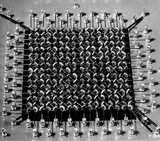 and Clifford Berry demonstrate in Nov. the ABC prototype
 - 1941 - Konrad Zuse in Germany developed in secret the Z3
- 1943 - In Britain, the Colossus was designed in secret at Bletchley Park to decode German messages
- 1944 - Howard Aiken developed the Harvard Mark I mechanical computer for the Navy
- 1945 - John W. Mauchly and J. Presper Eckert built ENIAC at U of PA for the U.S. Army
- 1946 - Mauchly and Eckert start Electronic Control Co., received grant from National Bureau of Standards to build a ENIAC-type computer with magnetic tape input/output, renamed UNIVAC in 1947 but run out of money, formed in Dec. 1947 the new company Eckert-Mauchly Computer Corporation (EMCC).

- 1948 - Howard Aiken developed the Harvard Mark III electronic computer with 5000 tubes
- 1948 - U of Manchester in Britain developed the SSEM Baby electronic computer with CRT memory
- 1949 - Mauchly and Eckert in March successfully tested the BINAC stored-program computer for Northrop Aircraft, with mercury delay line memory and a primitive magentic tape drive; Remington Rand bought EMCC Feb. 1950 and provided funds to finish UNIVAC
- 1950- Commander William C. Norris led Engineer ing Research Associates to develop the Atlas, based on the secret code-breaking computers used by the Navy in WWII; the Atlas was 38 feet long, 20 feet wide, and used 2700 vacuum tubes
- 1951 - S. A. Lebedev developed the MESM computer in Russia
- 1951 - Remington Rand successfully tested UNIVAC March 30, 1951, and anno
 unced to the public its sale to the Census Bureau June 14, 1951, the first commercial computer to feature a magnetic tape storage system, the eight UNISERVO tape drives that stood separate from the CPU and control console on the other side of a garage-size room. Each tape drive was six feet high and three feet wide, used 1/2-inch metal tape of nickel-plated bronze 1200 feet long, recorded data on eight channels at 100 inches per second with a transfer rate of 7,200 characters per second. The comp
lete UNIVAC system weighed 29,000 pounds, included 5200 vacuum tubes, and an offline typewriter-printer UNIPRINTER with an attached metal tape drive. Later, a punched card-to-tape machine was added to read IBM 80-column and Remington Rand 90-column cards.
- 1952 - Remington Rand bought the ERA in Dec. 1951 and combined the UNIVAC product line in 1952: the ERA 1101 computer became the UNIVAC 1101. The UNIVAC I was used in November to calculate the presidential election returns and successfully predict the winner, although it was not trusted by the TV networks who refused to use the prediction.
- 1954 - The SAGE aircraft-warning system was the largest vacuum tube computer system ever built. It began in 1954 at MIT's Lincoln Lab with funding from the Air Force. The first of 23 Direction Centers went online in Nov. 1956, and the last in 1962. Each Center had two 55,000-tube computers built by IBM, MIT, AND Bell Labs. The 275-ton computers known as "Clyde" were based on Jay Forrester's Whirlwind I and had magnetic core memory, magentic drum and magnetic tape storage. The Centers were connected by an early network, and pioneered development of the modem and graphics display.


2.Second Generation Computers (1954 -1959) - transistor
- 1950 - National Bureau of Standards (NBS) introduced its Standards Eastern Automatic Computer (SEAC) with 10,000 newly developed germanium diodes in its logic circuits, and the first magnetic disk drive designed by Jacob Rabinow
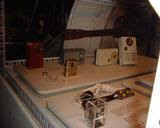
- 1953 - Tom Watson, Jr., led IBM to introduce the model 604 computer, its first with transistors, that became the basis of the model 608 of 1957, the first solid-state computer for the commercial market. Transistors were expensive at first, cost $8 vs. $.75 for a vacuum tube. But Watson was impressed with the new transistor radios and gave them to his engineers to study. IBM also developed the 650 Magnetic Drum Calculator, the first by IBM to use magnetic drum memory rather punched cards, and began shipment of the 701 scientific "Defense Calculator" that was the first of the Model 700 line that dominated main frame computers for the next decade
- 1955 - IBM introduced the 702 business computer; Watson on the cover of Time magazine March 28
- 1956 - Bendix G-15A small business computer sold for only $45,000, designed by Harry Huskey of NBS
- 1959 - General Electric Corporation delivered its Electronic Recording Machine Accounting (ERMA) computing system to the Bank of America in California; based on a design by SRI, the ERMA system employed Magnetic Ink Character Recognition (MICR) as the means to capture data from the checks and introduced automation in banking that continued with ATM machines in 1974.




3. Third Generation Computers (1959 -1971) - IC
- 1959 - Jack Kilby of Texas Instruments patented the first integrated circuit i
 n Feb. 1959; Kilby had made his first germanium IC in Oct. 1958; Robert Noyce at Fairchild used planar process to make connections of components within a silicon IC in early 1959; the first commercial product using IC was the hearing aid in Dec. 1963; General Instrument made LSI chip (100+ components) for Hammond organs 1968
 - 1964 - IBM produced SABRE, the first airline reservation tracking system for American Airlines; IBM announced the System/360 all-purpose co
 mputer, using 8-bit character word length (a "byte") that was pioneered in the 7030 of April 1961 that grew out of the AF contract of Oct. 1958 following Sputnik to develop transistor computers for BMEWS
 - 1968 - DEC introduced the first "mini-computer", the PDP-8, named after the mini-skirt; DEC was founded in 1957 by Kenneth H. Olsen who came for the SAGE project a
 t MIT and began sales of the PDP-1 in 1960
 - 1969 - Development began on ARPAnet, funded by the DOD
- 1971 - Intel produced large scale integrated (LSI) circuits that were used in the digital delay line, the first digital audio device.


4. Fourth Generation (1971-1991) - microprocessor
- 1971 - Gilbert Hyatt at Micro Computer Co. patented the microprocessor; Ted Hoff at Intel in February introduced the 4-bit 4004, a VSLI of 2300 components, for the Japanese company Busicom to create a single chip for a calculator; IBM introduced the first 8-inch "memory disk", as it was called then, or the "floppy disk" later; Hoffmann-La Roche patented the passive LCD display for calculators and watches; in November Intel announced the first microcomputer, the MCS-4; Nolan Bushnell designed the first commercial arcade video game "Computer Space"
- 1972 - Intel made the 8-bit 8008 and 8080 microprocessors; Gary Kildall wrote his Control Program/Microprocessor (CP/M) disk operating system to provide instructions for floppy disk drives to work with the 8080 processor. He offered it to Intel, but was turned down, so he sold it on his own, and soon CP/M was the standard operating system for 8-bit microcomputers; Bushnell created Atari and introduced the successful "Pong" game
- 1973 - IBM developed the first true sealed hard disk drive, called the "Winchester" after the rifle company, using two 30 Mb platters; Robert Metcalfe at Xerox PARC created Ethernet as the basis for a local area network, and later founded 3COM
- 1974 - Xerox developed the Alto workstation at PARC, with a monitor, a graphical user interface, a mouse, and an ethernet card for networking
- 1975 - the Altair personal computer is sold in kit form, and influenced Steve Jobs and Steve Wozniak
- 1976 - Jobs and Wozniak developed the Apple personal computer; Alan Shugart introduced the 5.25-inch floppy disk
- 1977 - Nintendo in Japan began to make computer games that stored the data on chips inside a game cartridge that sold for around $40 but only cost a few dollars to manufacture. It introduced its most popular game "Donkey Kong" in 1981, Super Mario Bros in 1985
- 1978 - Visicalc spreadsheet software was written by Daniel Bricklin and Bob Frankston
- 1979 - Micropro released Wordstar that set the standard for word processing software
- 1980 - IBM signed a contract with the Microsoft Co. of Bill Gates and Paul Allen and Steve Ballmer to supply an operating system for IBM's new PC model. Microsoft paid $25,000 to Seattle Computer for the rights to QDOS that became Microsoft DOS, and Microsoft began its climb to become the dominant computer company in the world.
- 1984 - Apple Computer introduced the Macintosh personal computer January 24.
- 1987 - Bill Atkinson of Apple Computers created a software program called HyperCard that was bundled free with all Macintosh computers. This program for the first time made hypertext popular and useable to a wide number of people. Ted Nelson coined the terms "hypertext" and "hypermedia" in 1965 based on the pre-computer ideas of Vannevar Bush published in his "As We May Think" article in the July 1945 issue of The Atlantic Monthly.
 Intel 4004 microprocessor in 1971, from Intel Museum   |  Apple I of 1976 , from Smithsonian NMAH  MITS Altair 8800A 1975 from  |
| |
 | |

5. Fifth Generation (1991 and Beyond)
- 1991 - World-Wide Web (WWW) was developed by Tim Berners-Lee and released by CERN.
- 1993 - The first Web browser called Mosaic was created by student Marc Andreesen and programmer Eric Bina at NCSA in the first 3 months of 1993. The beta version 0.5 of X Mosaic for UNIX was released Jan. 23 1993 and was instant success. The PC and Mac versions of Mosaic followed quickly in 1993. Mosaic was the first software to interpret a new IMG tag, and to display graphics along with text. Berners-Lee objected to the IMG tag, considered it frivolous, but image display became one of the most used features of the Web. The Web grew fast because the infrastructure was already in place: the Internet, desktop PC, home modems connected to online services such as AOL and Compuserve
- 1994 - Netscape Navigator 1.0 was released Dec. 1994, and was given away free, soon gaining 75% of world browser market.
- 1996 - Microsoft failed to recognized the importance of the Web, but finally released the much imporoved browser Explorer 3.0 in the summer.
 Nokia 9210 Communicator is part of the latest wave of web cell phones  world's first production microchips made of silicon-on-insulator (SOI) transistors and copper wiring by IBM (AP 5/22/00)    body scans to buy clothes |  The raveMP player sells for $269 and can store more than an hour of MP3 music | |


Monday, February 2, 2009
What Is Computer??
A computer is a machine that manipulates data according to a list of instructions.
The first devices that resemble modern computers date to the mid-20th century (1940–1945), although the computer concept and various machines similar to computers existed earlier. Early electronic computers were the size of a large room, consuming as much power as several hundred modern personal computers (PC). Modern computers are based on tiny integrated circuits and are millions to billions of times more capable while occupying a fraction of the space. Today, simple computers may be made small enough to fit into a wristwatch and be powered from a watch battery. Personal computers, in various forms, are icons of the Information Age and are what most people think of as "a computer"; however, the most common form of computer in use today is the embedded computer. Embedded computers are small, simple devices that are used to control other devices — for example, they may be found in machines ranging from fighter aircraft to industrial robots, digital cameras, and children's toys.
The ability to store and execute lists of instructions called programs makes computers extremely versatile and distinguishes them from calculators. The Church–Turing thesis is a mathematical statement of this versatility: any computer with a certain minimum capability is, in principle, capable of performing the same tasks that any other computer can perform. Therefore, computers with capability and complexity ranging from that of a personal digital assistant to a supercomputer are all able to perform the same computational tasks given enough time and storage capacity.
The first devices that resemble modern computers date to the mid-20th century (1940–1945), although the computer concept and various machines similar to computers existed earlier. Early electronic computers were the size of a large room, consuming as much power as several hundred modern personal computers (PC). Modern computers are based on tiny integrated circuits and are millions to billions of times more capable while occupying a fraction of the space. Today, simple computers may be made small enough to fit into a wristwatch and be powered from a watch battery. Personal computers, in various forms, are icons of the Information Age and are what most people think of as "a computer"; however, the most common form of computer in use today is the embedded computer. Embedded computers are small, simple devices that are used to control other devices — for example, they may be found in machines ranging from fighter aircraft to industrial robots, digital cameras, and children's toys.
The ability to store and execute lists of instructions called programs makes computers extremely versatile and distinguishes them from calculators. The Church–Turing thesis is a mathematical statement of this versatility: any computer with a certain minimum capability is, in principle, capable of performing the same tasks that any other computer can perform. Therefore, computers with capability and complexity ranging from that of a personal digital assistant to a supercomputer are all able to perform the same computational tasks given enough time and storage capacity.
Subscribe to:
Posts (Atom)